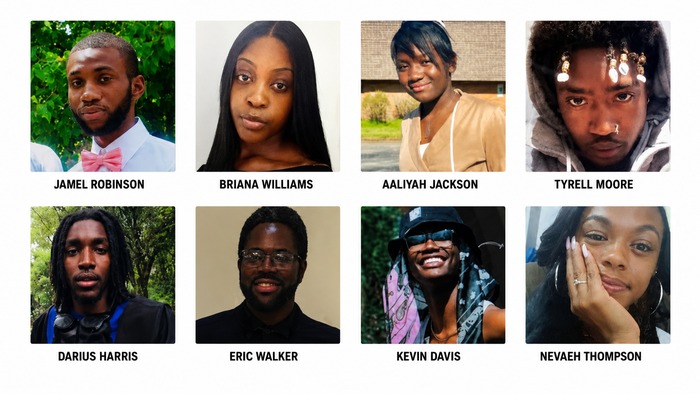
There is something dangerously polite about saying that Black people were once “hanging from trees.” The expression sounds almost passive, as though Black bodies simply appeared there and the tree itself were the central actor. That grammar matters because passive language can conceal moral agency. Black Americans did not simply end up hanging from trees. They were seized, beaten, tortured, shot, burned, mutilated, and lynched by people, often in front of crowds, while institutions that claimed to represent law and order repeatedly failed to protect the victims or punish the killers. When the language is softened, the crime can be softened with it.
The historical record does not permit that kind of sanitizing. The Equal Justice Initiative has documented nearly 6,500 racial-terror lynchings of Black people in the United States between 1865 and 1950, including nearly 2,000 during the Reconstruction era and more than 4,400 in the period after Reconstruction. Older Tuskegee Institute statistics, cited by the NAACP, recorded 4,743 lynchings between 1882 and 1968, of which 3,446 victims were African American. The datasets use different definitions and date ranges, but they converge on the same historical reality: lynching was not an occasional outbreak of individual prejudice. It became a system of racial terror used to intimidate Black communities, enforce racial subordination, and punish Black political, economic, and social advancement.
The problem with the phrase “hanging from trees,” therefore, is not merely that it is imprecise. It can function as a euphemism by removing the subject from the sentence. Someone tied the rope. Someone gathered the crowd. Someone refused to intervene. Someone looked away. Someone wrote the accusation. Someone controlled the jail. Someone decided that Black life did not deserve the protection of law. A truthful moral account must restore those agents to the sentence, because Scripture does not treat bloodshed as an abstraction. It identifies the shedding of innocent blood as an act committed by responsible persons and as a matter that eventually comes before the judgment of God.
The Tree Was Part of the Terror
The biblical symbolism of a body displayed upon a tree makes the history even more severe. Deuteronomy 21:22–23 speaks of a person who had first been lawfully judged worthy of death and whose body was afterward hanged upon a tree. Even in that circumstance, the Torah limited the public exposure of the body and commanded that it not remain there overnight. The text assumes lawful judgment before public display and places a boundary around the humiliation of the dead.
Racial lynching inverted that order. In many cases there was no legitimate trial, no impartial hearing, no lawful conviction, and no serious evidentiary standard. The mob became prosecutor, judge, and executioner. The hanging body then became more than the remains of a murdered person; it became a public warning. The objective was not simply to kill one Black man or woman but to communicate fear to an entire population. The Equal Justice Initiative describes racial-terror lynching in precisely this social sense: it was used to enforce racial hierarchy and terrorize Black communities. The tree was therefore not incidental to the crime. It became part of the message.
This is why the history cannot be reduced to a vague statement that Black people were “hanging from trees.” A Black body suspended publicly before a white crowd communicated political and racial power. It said that one group possessed the practical ability to accuse, seize, humiliate, kill, and display another group with little expectation of punishment. Ecclesiastes 4:1 describes the structure with painful accuracy: “So I returned, and considered all the oppressions that are done under the sun: and behold the tears of such as were oppressed, and they had no comforter; and on the side of their oppressors there was power.” The biblical problem is not merely hatred in the heart. It is hatred joined to power and turned into oppression.
Scripture Condemns the Murder of the Innocent
The Torah is explicit concerning innocent blood. Exodus 23:7 commands, “Keep thee far from a false matter; and the innocent and righteous slay thou not: for I will not justify the wicked.” That precept destroys the moral logic of a mob. Biblical justice does not permit death because of rumor, racial suspicion, popular anger, an accusation repeated loudly enough, or a stereotype accepted by the surrounding culture. Deuteronomy 19:15 requires evidentiary sufficiency, Deuteronomy 1:17 forbids respect of persons in judgment, and Leviticus 19:15 commands Israel to do no unrighteousness in judgment. Proverbs 17:15 goes further and declares that both justifying the wicked and condemning the just are abominations before the LORD.
These precepts are especially important when a society tries to hide injustice behind the existence of legal institutions. The fact that a sheriff, court, legislature, jury, or governor exists does not logically prove that justice exists. Law and righteousness are not identical terms. A law can be unrighteous, a verdict can be corrupt, an official can be partial, and a government can preserve wickedness while still calling its procedures lawful. Isaiah 10:1–2 therefore pronounces woe upon those who “decree unrighteous decrees” and use institutional power to turn the needy aside from judgment. Scripture does not merely command obedience to judgment; it judges the judgment.
This distinction is essential to understanding racial lynching. Some victims were seized from jails. Some were killed after accusations that had never been fairly tested. Some were targeted because they violated racial customs, competed economically, exercised political rights, or resisted humiliation. Ida B. Wells demonstrated in her anti-lynching investigations that the standard public explanations for lynching frequently concealed other motives and that mob violence operated as a mechanism of racial and social control. The biblical question is therefore not whether an accusation existed, but whether there was truth, impartiality, evidence, righteous judgment, and lawful authority. Where those were absent, the language of “justice” could not convert murder into righteousness.
Racial Terror Was Government by Fear
Lynching must also be understood in its historical relationship to emancipation and Reconstruction. After slavery, Black Americans voted, held public office, established schools and churches, acquired land, built businesses, organized communities, and attempted to exercise newly recognized civil and political rights. White racial violence answered much of that advancement. The Equal Justice Initiative’s research on Reconstruction documents nearly 2,000 racial-terror lynchings of Black people by white mobs between 1865 and 1876 and describes a broader reign of violence that helped nullify the promises of emancipation and constitutional equality.
That history demonstrates why lynching cannot be reduced to private hatred. When violence repeatedly appears at the point where a people attempt to vote, own property, compete, organize, educate their children, resist exploitation, or claim equal standing before the law, the violence is performing a social function. It is governing by terror. The plantation system had formally changed, but racial hierarchy sought other instruments by which to enforce its boundaries.
Scripture recognizes this connection between oppression and organized power. Psalm 82 rebukes rulers who “judge unjustly, and accept the persons of the wicked,” and then commands them to “defend the poor and fatherless,” “do justice to the afflicted and needy,” and “deliver the poor and needy” from the hand of the wicked. The passage assumes that judgment is not morally neutral when power is being used against the vulnerable. The duty of a judge is not to protect the prestige of the powerful but to apply righteousness without partiality.
Blood Speaks Before God
The first murder in Scripture establishes a principle that runs through the rest of the Bible. After Cain killed Abel, the LORD said in Genesis 4:10, “What hast thou done? the voice of thy brother’s blood crieth unto me from the ground.” Blood has no literal voice, yet Scripture presents innocent blood as creating a moral claim before the Judge of all the earth. Cain could remove Abel from human sight, but he could not remove Abel’s blood from divine notice.
Numbers 35:33 develops the same idea by teaching that bloodshed defiles the land. Psalm 9:12 says that when God “maketh inquisition for blood, he remembereth them: he forgetteth not the cry of the humble.” These precepts are devastating to every society that imagines a closed case, an acquittal, an unmarked grave, a destroyed record, or the passage of time can erase moral liability. Human governments can forget. Families can conceal. Textbooks can omit. Public memory can be selective. Scripture nevertheless declares that God remembers blood.
This is the theological reason historical truth matters. Remembering lynching is not an exercise in perpetual emotional injury; it is an act of refusing to call evil by a softer name. If innocent blood matters to God, then it should matter to those who claim to believe His Word. The biblical response to racial terror cannot be amnesia, because the God of Scripture repeatedly commands His people to distinguish between righteous judgment and bloodguilt.
God Is Not Neutral Between the Oppressor and the Oppressed
Modern religious speech sometimes treats neutrality as though it were the highest form of righteousness. Scripture does not. Psalm 103:6 says, “The LORD executeth righteousness and judgment for all that are oppressed.” Psalm 146:7 describes Him as the one “which executeth judgment for the oppressed.” Isaiah 1:17 commands, “Seek judgment, relieve the oppressed, judge the fatherless, plead for the widow.” These texts do not describe a God who observes oppression from a morally neutral distance.
Biblical impartiality means that judgment is rendered according to righteousness rather than according to status, wealth, race, office, or power. If one party is oppressing another, impartial judgment does not require pretending that both parties occupy the same moral position. It requires identifying the oppressor as the wrongdoer and the oppressed as the injured party. Otherwise, the language of neutrality becomes another device for protecting injustice.
The prophets apply this principle not only to individuals but to peoples and nations. Joel 3:19 speaks of judgment “for their violence against the children of Judah, because they have shed innocent blood in their land.” The point is not that every historical enemy should be mechanically mapped onto a modern ethnicity. The precept is that national power does not immunize a people from divine judgment when that power is used to shed innocent blood. The same God who judges individuals judges systems, rulers, and nations according to righteousness.
“Vengeance Belongeth Unto Me”
Scripture does not stop with the statement that God sees oppression. It teaches that God recompenses it. Deuteronomy 32:35 declares, “To me belongeth vengeance, and recompence,” and Deuteronomy 32:43 gives the principle even more directly: “for he will avenge the blood of his servants, and will render vengeance to his adversaries.” The biblical doctrine of vengeance is therefore not a peripheral idea inserted into a few angry passages. It is part of the doctrine of divine justice.
Psalm 94 opens by addressing the “LORD God, to whom vengeance belongeth” and then describes wicked men who afflict God’s heritage, murder the vulnerable, and persuade themselves that “the LORD shall not see.” The Psalm answers their confidence with a rhetorical question: “He that planted the ear, shall he not hear? he that formed the eye, shall he not see?” The logic is simple. Delayed judgment cannot be used as evidence that judgment does not exist. The fact that an oppressor has not yet been recompensed does not imply that the Judge has failed to observe the crime.
The same precept appears in the New Testament. Revelation 6:9–10 depicts the slain crying to God, “How long, O Lord, holy and true, dost thou not judge and avenge our blood on them that dwell on the earth?” Their request for divine judgment is not condemned. Luke 18:7 asks, “And shall not God avenge his own elect, which cry day and night unto him?” and the following verse answers that He will avenge them. Hebrews 10:30 repeats the Torah: “Vengeance belongeth unto me, I will recompense, saith the Lord.”
When these passages are read together, the precepts agree. Innocent blood cries to God. God remembers the oppressed. God judges unrighteous judgment. God hears the cry of His servants. God reserves vengeance to Himself. God promises recompense. The theological conclusion is not difficult to derive because Scripture repeatedly supplies the premises.
Divine Vengeance Is Not Permission for Private Revenge
The doctrine of divine vengeance must be distinguished from personal retaliation. Romans 12:19 commands, “Dearly beloved, avenge not yourselves, but rather give place unto wrath: for it is written, Vengeance is mine; I will repay, saith the Lord.” The prohibition against private vengeance is grounded in the certainty of divine vengeance. Paul does not tell the injured that the debt is imaginary. He tells them that the debt belongs to a higher court.
That distinction matters for Black people confronting the history of racial terror. We can document what happened, teach our children, expose lies, demand lawful judgment, preserve names, reject historical euphemisms, and refuse to pretend that evil became good merely because the perpetrators escaped prosecution. None of those actions require us to become another mob. Scripture gives us a framework that is both uncompromising and disciplined: we tell the truth about bloodshed, pursue righteousness where righteous judgment remains possible, and leave final recompense to the God who says, “I will repay.”
This is also why the biblical promise of vengeance should not be confused with racial hatred. Scripture does not teach that a person is condemned merely because he belongs to a particular ethnicity. It teaches that God judges deeds, bloodguilt, oppression, partial judgment, violence, and rebellion. The moral indictment is not that Europeans or white people exist; the indictment is that racial systems built and defended by human beings committed acts of terror against Black people and that no race, nation, institution, or generation possesses an exemption from the judgment of God.
They Were Not Merely “Hanging from Trees”
The language must finally be corrected. Black people were not merely “hanging from trees.” They were lynched. They were murdered by identifiable human beings within a racial order that often made their killers confident that no serious consequence would follow. The tree became one of the public symbols of that confidence, and the euphemism becomes dangerous when it removes the killers from the sentence and leaves only the victims and the tree.
Scripture restores what euphemism removes: agency, guilt, blood, judgment, and remembrance. Genesis says innocent blood cries from the ground. Exodus forbids the slaying of the innocent. Deuteronomy forbids partial judgment and reserves vengeance to God. Psalms says God remembers blood and executes judgment for the oppressed. The prophets condemn rulers who turn justice into oppression. Luke says God will avenge His elect. Revelation records the slain asking Him to avenge their blood. Hebrews repeats that vengeance and recompense belong to the Lord.
For that reason, Black historical memory does not require the permission of a sanitized national vocabulary. We do not have to describe racial terror in terms that make the perpetrators comfortable. We can call lynching what it was, mourn the dead without surrendering to despair, and understand that an American court was never the highest court. Many men who participated in racial terror went to their graves without answering before a human judge, but Scripture never teaches that death removes a man from judgment.
The final biblical conclusion is therefore not a call for mob retaliation; it is a declaration of confidence in the righteousness of the Most High. If blood was shed innocently, He saw it. If judgment was corrupted, He saw it. If the oppressed cried and no earthly court answered them, He heard them. If His servants were murdered and the perpetrators escaped men, they did not escape Him. Deuteronomy 32:43 says that He “will avenge the blood of his servants,” and the rest of Scripture repeatedly confirms the same principle. The trees may be empty now and the crowds may be gone, but the blood has not become invisible before God. He remembers, He judges, and according to His own Word, He will avenge.