Opening: This Is Not Merely About One Man
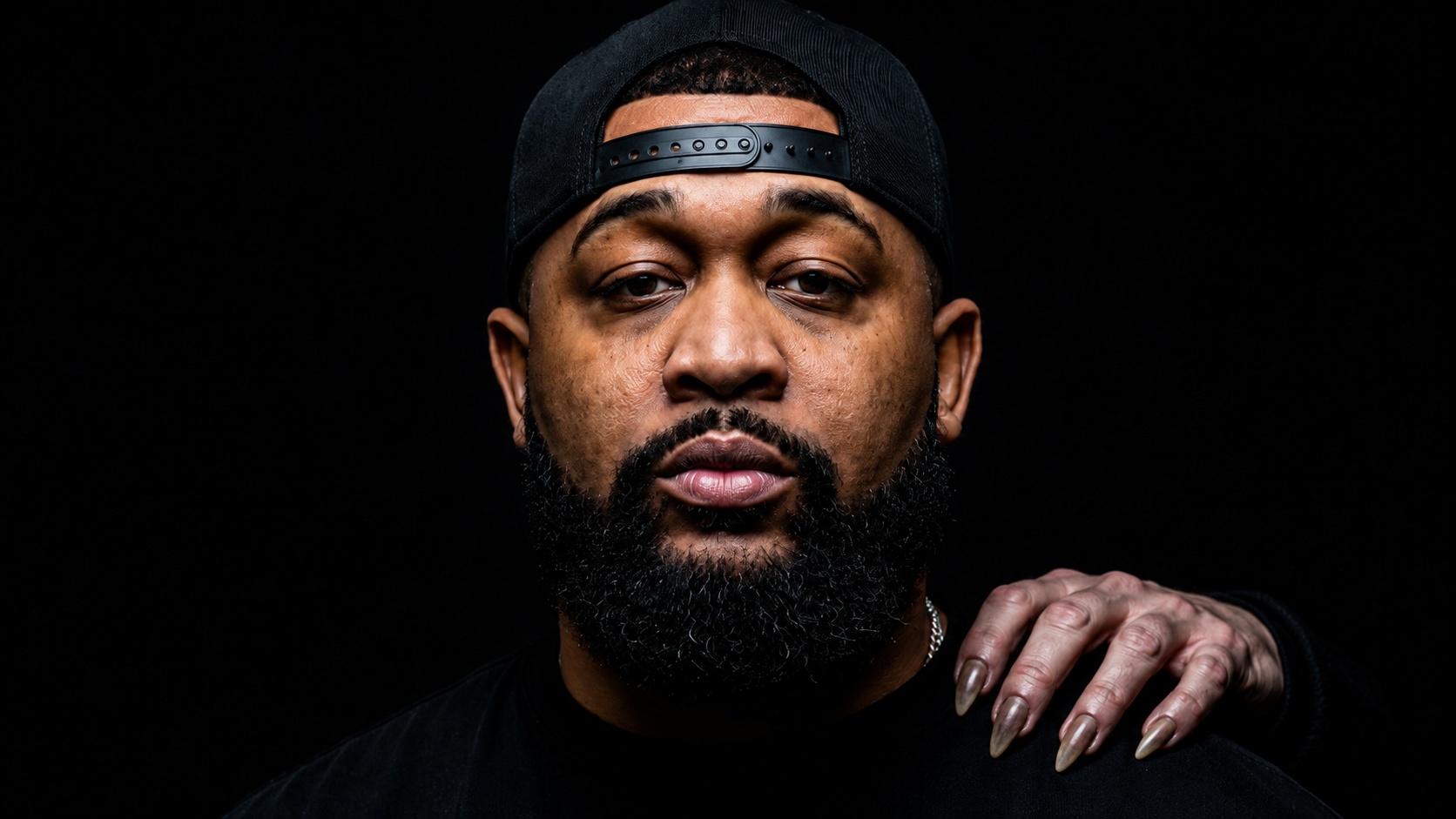
Officer Brandon Tatum is not dangerous because he is Black and conservative. Black people have the right to think, vote, disagree, criticize political parties, question popular movements, and challenge weak arguments wherever they find them. The issue is not that Tatum disagrees with liberal Black politics. The issue is that his public commentary often functions as a shield for white supremacy while wearing a Black face.
That distinction matters. A man can share our complexion and still serve an argument that is hostile to our people. A man can speak confidently and still reason poorly. A man can rebuke Black people loudly and still fail to judge the powerful with the same measure. Scripture does not command us to accept a claim because of the speaker’s skin color, political branding, police background, or public confidence. Scripture commands righteous judgment.
1“Judge not according to the appearance, but judge righteous judgment.”
John 7:24
This is the standard. Not appearance. Not optics. Not the performance of courage. Not the applause of an audience already trained to accept anti-Black conclusions. Righteous judgment requires us to test what is being said, who benefits from it, whose suffering is minimized, whose power is protected, and whether the argument is consistent with truth.
The Function of Black Face on White Supremacy
White supremacy has always needed interpreters. It needs people who can make its conclusions sound reasonable, moral, patriotic, disciplined, and even biblical. In earlier generations, those arguments came directly from plantation preachers, segregationists, colonial theologians, police departments, politicians, and courts that baptized injustice with respectable language. Today, the machinery is more sophisticated. The same system can elevate a Black voice, place him before a camera, and use his identity to say what white supremacy wants said without appearing openly racist.
This is why Isaiah 5:20 matters.2 Oppression does not always present itself as oppression. Sometimes it calls itself order. Sometimes it calls itself accountability. Sometimes it calls itself law and order while refusing to examine whether the law has been applied with partiality. Sometimes it condemns the oppressed for their reaction while refusing to confront the system that produced the wound.
That is the problem of putting Black face on white supremacy. It gives the audience permission to say, “See, a Black man said it, so it cannot be anti-Black.” But that is not logic. That is identity laundering. A claim does not become true because a Black person says it. A false argument does not become righteous because it came from someone with brown skin. A system does not become innocent because it found a Black spokesman.
From a logical standpoint, this is an appeal to identity. It shifts attention away from the argument itself and toward the person delivering it. The audience is trained to believe the messenger’s identity settles the matter before the evidence is examined. But righteous judgment does not work that way. The question is not whether a Black man said it. The question is whether the claim is true, whether the reasoning is sound, whether the judgment is equal, and whether the conclusion protects righteousness or excuses oppression.
Reframing as Narrative Control
Much of Tatum’s public style depends on reframing. When Black people raise questions about policing, the frame becomes victim mentality. When Black people challenge racial hypocrisy, the frame becomes race-baiting. When Black people question an official story, the frame becomes emotionalism. When Black people expose double standards, the frame becomes an attack on law and order. The original question disappears, and the audience is handed a more convenient target.
This is not careful reasoning. It is narrative control. A legitimate question about evidence becomes a question about Black attitude. A concern about racialized judgment becomes a lecture about personal responsibility. A critique of institutional power becomes a performance about Black dysfunction. By the time the reframing is complete, the system is no longer on trial. The people asking questions are.
Proverbs 18:17 matters here3 because the first speaker can appear righteous until the matter is searched. A polished monologue can sound convincing when no one is allowed to test the premises. A confident conclusion can seem rational when the audience is not trained to separate evidence from interpretation. This is why Israelites must be disciplined thinkers. We cannot allow volume, confidence, police credentials, or political branding to replace examination.
Narrative control also depends on selective suspicion. The oppressed are often treated as suspicious by default, while institutions are treated as credible by default. Black pain is interrogated. State power is trusted. Black testimony is doubted. Official framing is accepted. That imbalance is not righteous judgment. It is partiality dressed up as common sense.
The Israelite Problem: Internal Voices Defending Captivity
From an Israelite perspective, the issue is even deeper. Our people have always had to contend not only with foreign oppression, but with internal voices trained to defend captivity. Every empire finds people among the oppressed who are willing to interpret oppression on the empire’s behalf. They become useful because they know the language of the people, understand the wounds of the people, and can redirect the anger of the people away from the system that harmed them.
This is not new. Captivity has always produced two kinds of voices: watchmen who warn the people, and servants of empire who teach the people to accept their chains. Isaiah 56:10 speaks directly to blind watchmen who cannot warn the people.5 A watchman who cannot identify danger is not protecting the flock. A watchman who excuses the wolf is not a watchman at all.
This is why the issue cannot be reduced to “Black conservative versus Black liberal.” That frame is too small. The real question is whether a man’s speech defends truth or protects power. Does his speech expose unrighteous judgment, or does it excuse it? Does it give the oppressed tools to reason clearly, or does it train them to distrust their own experience and bow before the same systems that have historically destroyed them?
Proverbs 29:26 reminds us6 that seeking the ruler’s favor is not the same as righteous judgment. The favor of the powerful can be profitable. It can bring platforms, invitations, applause, protection, and access. But access is not truth. Proximity to power is not righteousness. A man can be rewarded by the ruler and still be wrong before The Most High.
Hard Truth Versus Useful Propaganda
Tatum may believe he is simply telling hard truths. But hard truth and useful propaganda are not the same thing. A hard truth corrects a people without selling them back into mental captivity. Propaganda disciplines the oppressed while flattering the powerful. A hard truth demands righteousness from all sides. Propaganda makes the powerless answer for everything while the powerful walk away clean.
There is a righteous way to rebuke your own people. The prophets did it. Moses did it. Christ did it. But prophetic rebuke is not the same as public performance for an audience that already despises the people being rebuked. Prophetic rebuke calls the people back to covenant, wisdom, holiness, and judgment. Propaganda uses correction as a weapon to confirm the prejudices of the powerful.
Leviticus 19:15 forbids honoring the mighty in judgment.7 That command is critical. The law does not merely forbid favoritism toward the poor. It also forbids honoring the mighty. In other words, righteousness is not sentimental toward the weak, and it is not submissive toward the powerful. It judges both by the same standard.
That is the missing balance in much of Tatum’s rhetoric. Black failure is magnified. Black suspicion is intensified. Black pain is minimized. Black questions are mocked. Meanwhile, the systems that have historically targeted, exploited, policed, miseducated, and economically weakened Black people are often treated as though they deserve the benefit of the doubt. That imbalance is not courage. It is partial judgment.
Applause Does Not Make an Argument True
Applause does not make an argument true. Popularity does not make a conclusion righteous. A clip can go viral and still be logically weak. A crowd can cheer and still be morally wrong. Exodus 23:2 forbids following a multitude to pervert judgment8 because the majority can be trained into unrighteousness.
This matters in the age of social media. Algorithms reward outrage, certainty, mockery, and tribal confirmation. A commentator can build an entire platform by giving an audience the conclusion it already wanted, then dressing that conclusion in the language of bravery. But Scripture does not measure truth by engagement. Scripture measures judgment by righteousness.
Proverbs 19:9 warns against false witness and lies.4 That principle includes more than direct fabrication. It also speaks to the danger of framing a matter in a way that distorts the truth. A person can mislead by omission. He can mislead by emphasis. He can mislead by mocking one side while refusing to test the other. He can mislead by turning a complex matter into a slogan that protects power and shames the wounded.
Why Israelites Must Recover Discernment
Israelites must learn the difference between correction and captivity. We need correction. We need discipline. We need law, order, wisdom, family structure, moral seriousness, and accountability. But we do not need a counterfeit correction that trains us to love the systems that hate us. We do not need a public rebuke that functions as entertainment for people who have no desire to see us restored.
Hosea 4:6 explains9 why a people destroyed for lack of knowledge must recover discernment. Lack of knowledge is not merely the absence of information. It is the loss of covenant understanding, historical memory, moral clarity, and the ability to distinguish friend from enemy, shepherd from hireling, and truth from performance.
The Bible does not command Israelites to accept a man because he looks like us. Appearance can deceive. Skin color can deceive. Political branding can deceive. Religious language can deceive. Patriotic language can deceive. A Black face can still carry the logic of white supremacy if the argument serves the same old master.
This is why the phrase “Black face on white supremacy” is not an insult. It is a diagnosis. It describes a public function. It describes what happens when Black identity is used to make white power look innocent. It describes what happens when the suffering of Black people is minimized, mocked, reframed, and dismissed by someone whose presence gives the system racial cover.
Conclusion: Buy the Truth and Sell It Not
The issue is not whether Brandon Tatum has a right to speak. He does. The issue is whether Israelites have enough discernment to test what is being said. We are not obligated to mistake confidence for truth, police background for moral authority, conservative branding for courage, or Black skin for covenant loyalty.
Proverbs 23:23 commands us to buy the truth and sell it not.10 That means truth cannot be traded for access. It cannot be traded for applause. It cannot be traded for proximity to power. It cannot be traded for a platform. It cannot be traded for the comfort of being accepted by people who only celebrate Black voices when those voices discipline Black people and excuse the systems that harmed them.
White supremacy does not become less wicked because it found a Black spokesman.
A lie does not become truth because it learned how to wear our face.