
How captivity shaped our food customs—and why Israelites must examine what reaches our table.
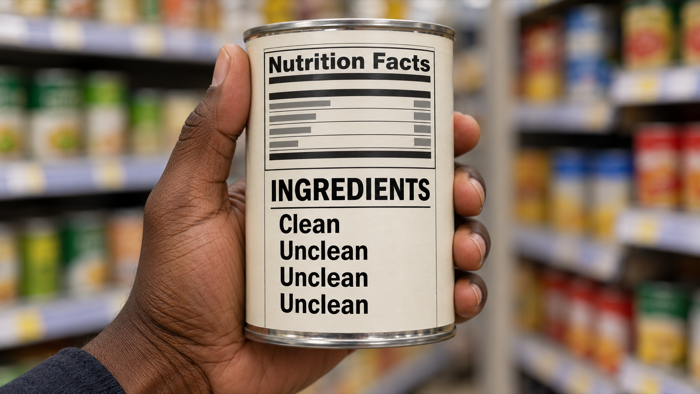
We shop at Walmart, Publix, Kroger, and other grocery stores for ordinary things: bread, candy, soup, or a bag of frozen vegetables. We pick up brands we recognize and foods we grew up eating. But when we start reading the ingredients, the shopping trip changes. The vegetables have pork seasoning. The soup contains shellfish. The candy has gelatin, but the package does not identify the animal it came from. Now we are standing in the aisle searching a manufacturer’s website just to figure out whether we can eat a snack.
For Israelites seeking to obey the Most High, this is a familiar frustration. We need to feed our families, but the food available around us was not prepared with our commandments in mind. Ezekiel records a warning that speaks directly to the condition of Israelites eating among other nations:
“Even thus shall the children of Israel eat their defiled bread among the Gentiles, whither I will drive them.”
Israelites outside our homeland
We are discussing our own people: Israelites scattered among the nations and living outside our ancestral homeland. Moses warned that disobedience would bring scattering among other peoples (Deuteronomy 28:64). Ezekiel places defiled bread within that condition of displacement (Ezekiel 4:13).
Here in America, we depend upon grocery stores, restaurants, school cafeterias, and food manufacturers that were not organized around the commandments given to our ancestors. Other people control much of what is grown, processed, sold, and served. We encounter their dietary customs so regularly that we can grow up practicing them before learning what our own Scriptures command.
Ezekiel’s bread was part of a sign concerning Jerusalem’s siege and the punishment of the Israelites. His food was weighed, his water was measured, and his bread was to be baked using human dung as fuel. When he objected, God permitted cattle dung instead (Ezekiel 4:12–15). The chapter connects these conditions with scarcity and the people wasting away because of their iniquity (Ezekiel 4:16–17).
Hosea gives a related warning: Ephraim would eat unclean things in Assyria (Hosea 9:3). Captivity would reach into something as ordinary and necessary as eating.
When captivity becomes a family recipe
We see this history at our own family gatherings. Someone brings chitterlings. Someone puts ham hocks in the greens. There is pork butt on the grill, bacon in the beans, and an argument waiting for whoever asks why everything needs a piece of pig in it.
These habits have a history. Montpelier’s research describes enslaved people receiving small weekly rations, commonly cornmeal and pork. They supplemented those provisions through gardening, hunting, and other means.1 Smithsonian research likewise documents enslaved people preparing excess pork that could not be preserved on some Lowcountry plantations.2
Chitterlings, hog maws, pig’s feet, fatback, and other pork dishes became embedded in customs passed through generations. These foods were not invented by American slavery, but enslavement and deprivation helped shape their place in our people’s diets.
Today, those meals can remind us of our mothers, grandparents, and childhood homes. But affection for the person who prepared a meal does not establish that the meal follows the commandments. A recipe can carry memories of family while also carrying customs learned in captivity.
Calling these heathen food customs identifies their conflict with the dietary commandments given to Israelites. Familiarity does not change that conflict. Swine remain prohibited regardless of the cut, the seasoning, or the occasion (Leviticus 11:7–8).
We can honor our ancestors’ survival without preserving every condition they survived.
Tradition can carry a health cost
The consequences are not limited to obedience. Some inherited eating patterns also expose our people to preventable health risks.
Chitterlings provide a specific example. The CDC warns that they can carry Yersinia and other disease-causing germs. A published investigation of an outbreak among Black infants found a strong association between household chitterling preparation and illness. Contamination can reach children who never ate the food themselves.34
Frequent consumption of heavily salted foods raises another concern. Excess sodium can raise blood pressure, and high blood pressure increases the risk of heart disease and stroke.5 Processed meats, including meats preserved through salting, curing, or smoking, also carry established colorectal-cancer risks. That finding concerns processed meat generally, including processed products made from animals otherwise permitted by Scripture.6
Think about how these habits accumulate: bacon at breakfast, a processed-meat sandwich at lunch, and heavily salted meat or vegetables at dinner. The concern is a repeated pattern, not merely one family gathering.
Our people’s illnesses have multiple causes, but that does not excuse ignoring dietary practices that contribute to harm. When high blood pressure and related illnesses are familiar within our families, “We have always eaten this” is a reason to examine the habit — not a reason to end the discussion.
God already identified what Israelites could eat
The commandments do not leave clean and unclean animals to appetite or popular opinion. Land animals must meet the stated requirements concerning the hoof and chewing the cud (Leviticus 11:3). Creatures taken from the waters must have fins and scales (Leviticus 11:9–12).
Deuteronomy connects these restrictions with the Israelites being a holy people unto God (Deuteronomy 14:2–3). The people were commanded to distinguish between clean and unclean animals (Leviticus 20:25–26).
That distinction does not disappear because a prohibited ingredient arrives in a colorful package — or because someone prayed over it before serving dinner.
The animal is not always obvious
Avoiding a pork chop is straightforward. Identifying an animal ingredient inside a processed product can require more work.
Consider the marshmallows we buy for hot chocolate, cereal treats, or a backyard fire. Campfire’s own product information states that its marshmallows use porcine gelatin, with an exception for certain export recipes. “Porcine” means derived from pigs. A marshmallow does not resemble swine, but processing changes how the ingredient reaches the customer.9
Labels help, but they do not always supply every detail. The FDA explains that some ingredients can appear collectively as flavors or spices, while certain incidental additives qualify for labeling exemptions.7 Federal regulations define natural flavoring broadly enough to include ingredients derived from plants, meat, seafood, poultry, eggs, and dairy products.8
Consequently, “natural” does not answer whether something meets the dietary commandments. Sometimes we must ask the manufacturer what an ingredient comes from. An unfamiliar word does not automatically establish defilement, and a familiar brand does not establish acceptability. We need to know what is actually in the food.
Make obedience practical
A store can contain thousands of products while still making our dietary requirements difficult to follow. A parent shopping after work may not have time to research six brands before getting dinner on the table. Someone relying on a cafeteria has less control than someone preparing meals at home. Cost, transportation, and cooking facilities also affect the choices available.
That should move us beyond criticizing another person’s plate. We can share verified products, prepare meals together, teach children the commandments, and help families obtain suitable ingredients. We can cook greens without pork, choose clearly identified ingredients, and build meals around plain fruits, vegetables, beans, grains, and clean meats.
Daniel lived under a foreign king, but he did not assume the king’s food was acceptable. He resolved not to defile himself and requested another arrangement (Daniel 1:8). He proposed an alternative rather than abandoning his responsibility (Daniel 1:12–15).
We should bring that same seriousness to our tables — and help one another make the changes.
Our ancestors’ customs must answer to their God
Living in the land of our captivity helps explain how foreign dietary customs became familiar. It does not require us to preserve those customs once we recognize the conflict.
The next time we shop at Walmart or Publix, order from a restaurant, or prepare a family meal, we have an opportunity to examine what we inherited. We can retain what agrees with the commandments and correct what does not. A government’s permission to sell a product does not establish that God permitted Israelites to eat it.
Our table should reflect the commandments given to our people, even when the marketplace, family tradition, and surrounding culture make obedience inconvenient.